
Important Metrics for Growing Your Tour and Activity Business • Regiondo
发布时间:2025-12-25 05:25:48 来源:暖竹传媒 作者:知识
- Metrics offer a solid way to measure performance so you can tell if you are meeting your goals or need to make improvements.
- It is easier to set goals when you have data to show you where you are so you can tell how much ground you need to cover to get to where you want.
- Metrics can also help you gain new perspectives that can earn you a competitive edge in your market.
- How many people click the links in your posts?
- Do they sign up for your newsletter or watch videos of your tours?
- How many page visitors book a tour?
- How many accept the gift voucher offer on your website page?
- How many make an inquiry about your products or services?
- Bookings divided by page visitors – measure the effectiveness of your web content.
- Bookings divided by sales enquiries – measure the effectiveness of your sales process.
- Email clicks divided by email opens – measure the effectiveness of your email copy.
- The number of people who attend a tour divided by total bookings – measure no-shows.
- They spend 300% more than new customers (RJMetrics)
- New customers would cost you 16X more to bring them to the same level of spending as repeat visitors (MarTech Zone)
- Attracting and converting new paying visitors costs about 5X-25X more than keeping an existing customer (Harvard Business Review)
- Repeat customers refer 2X more people than new visitors (Bain)
But retaining customers doesn’t happen on auto-pilot.
Occasionally rewarding customer loyalty is one way to boost customer retention. You can do this by allowing them to accumulate points over time and redeem them after a certain number of tours.
With a booking system like Regiondo, you can create value vouchers to reward customers and keep track of contact data and customer bookings so you can accurately measure repeat purchases. Learn more in a free Regiondo demo.
5. Average ratings across different platforms
High rankings on platforms like TripAdvisor or Google My Business are achieved at based on the reviews a business gets from customers. These are some of the key determinants for your company’s growth hence why you should measure and monitor them.
An online review is the equivalent of a referral from a friend. Picture this.
- Positive ratings do influence your local search ranking, which can lead to higher visibility in local searches for ideal tour seekers.
- Nine out of ten travelers said they read reviews before choosing an experience. That is a higher percentage than respondents who said location (88%) and price (87%) were important.
But there’s more to it.
A recent study found that 68% of millennial travelers look for reviews no older than three months to gain the freshest perspective.
In a TripAdvisor survey, 78% of respondents wanted to read reviews published within 90 days old.
This means you need a consistent stream of reviews so they are always recent and relevant.
Conclusion
All in all, it’s important to measure your tours and activities company’s key metrics to determine what actions lead to desired results and where you may need to improve.
Metrics to measure include:
- Traffic – the actual numbers and their sources
- Conversions
- Conversion rates
- Repeat purchases from the same customers
- Average ratings across different platforms
Every business needs to track its performance in order to know whether they are achieving any growth or not, as per their set goals. And in the case of your tour business, the same concept applies.
By tracking key metrics, your tours or activities company can better understand how its actions affect business performance.
If this sounds too complex, no worries, in this article we’ll guide you on the key metrics you need to measure as we elaborate on their importance to your business growth.
But before we dive into that, let’s address why metrics are important.
Why Are Metrics Important?
By collecting and analyzing different data as a tour or activities provider, you’ll be able to gather various insights concerning your business. This is beneficial in several ways, including:
Or as the old saying goes:“What gets measured gets managed.” Tracking the important metrics in your business will motivate and push you towards improvement.
5 Key Metrics to Track for Tours and Activities
1. Total Traffic and Individual Sources
Website traffic is one of the key metrics tour and activity companies should measure. This metric gives you insight into your company’s overall reach.
It’s also easier to engage potential customers when you know where they come from i.e your traffic source. This allows you to tailor your website experience for them and focus your attention where it makes the most sense. Some traffic sources will inevitably work better for you than others.
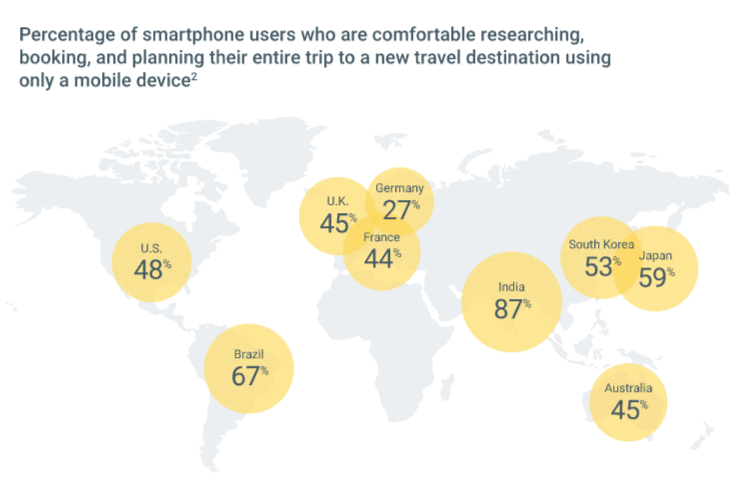
For example, by tracking how people enter your website, you can find out what devices they use. Research shows that about 50% of smartphone users in the US, UK, and France are comfortable booking tours from their smartphones.
Source
Therefore, if you find that a big number of your traffic comes from these users, then you can rightly optimize your site for mobile in order to improve conversion rates (more on this later). Or perhaps you can go a step further and provide a booking app featuring a loyalty points wallet, personalized video guides, and several secure payment processing options.
In addition, tools like Google Analytics can help you figure out which channels bring the most traffic to your website. For example, Instagram and Facebook are especially effective for tourism marketing. It would, therefore, be prudent to allocate more resources toward Instagram-worthy videos and beautiful Facebook photos.
By doing so, you can reduce your investment in less effective channels and direct it toward those that will yield the best ROI.
2. Conversions
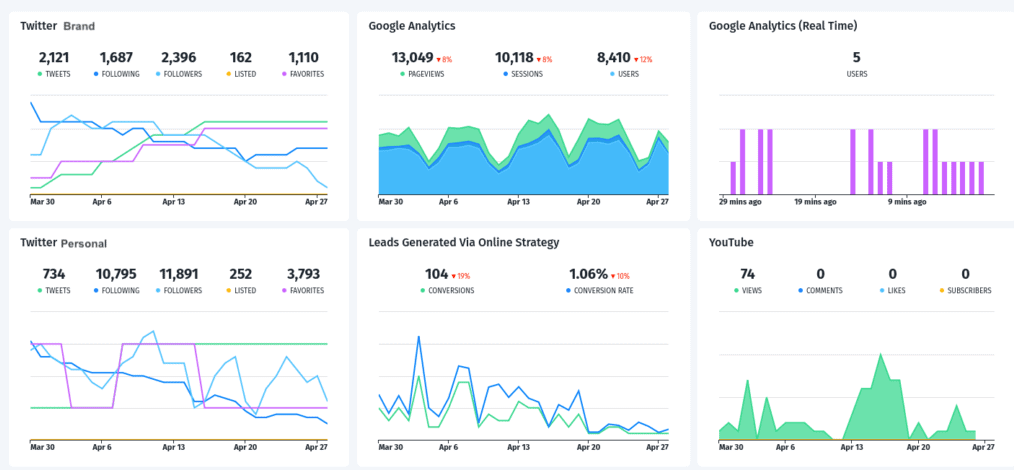
Conversions are the actions taken by users in response to a certain call-to-action you’ve placed in an ad, notification, social media post, offer, or your company’s web page. Some of the actions you can track to measure conversion include:
Again, an analytics tool such as Google Analytics can help you capture these details.
Source
This insight can help you determine what to improve on in your ads, web pages, and social media posts in order to drive more conversions.
For example, you can offer a reward for new signups if no one seems to be interested in your newsletter.
3. Conversion rates
Another key metric to measure is the percentage of people who take the next desirable action i.e conversion rates.
Imagine that 430 people visit your homepage, where you intend to collect their email addresses as a result of them signing up for your email newsletter.
If 60 people sign up, your conversion rate is 60/430 = 14%
This allows you to accurately track your performance over time, taking into account seasonal fluctuations and one-off traffic spikes.
Other relevant actions you’ll want to monitor to measure conversion rate include:
Armed with this information, you can start brainstorming ways to boost your conversion rates.
4. Repeat purchases from the same customers
To begin with, receiving repeat or referral customers is an affirmation that you are doing things right. With the confidence that your strategy is working, you can invest more resources in it.
Secondly, returning customers are superior to new customers for a variety of reasons: